
In Conversation with Lindsey Olsson!
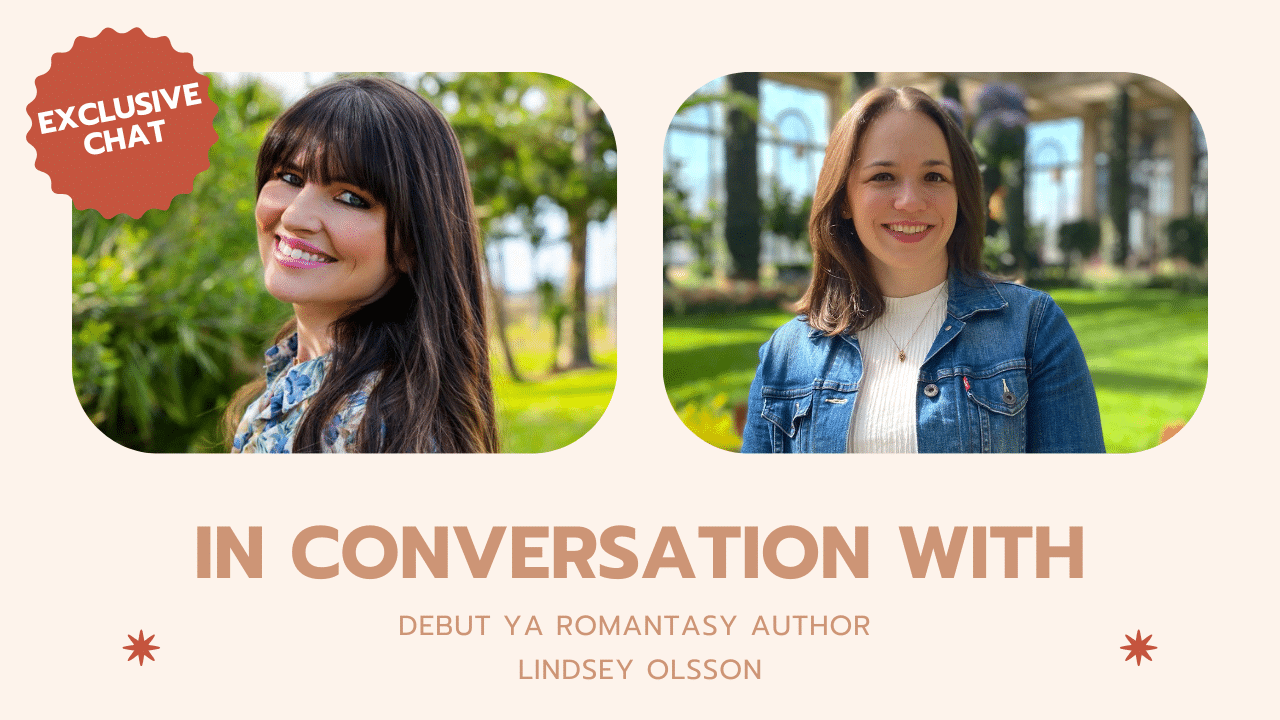
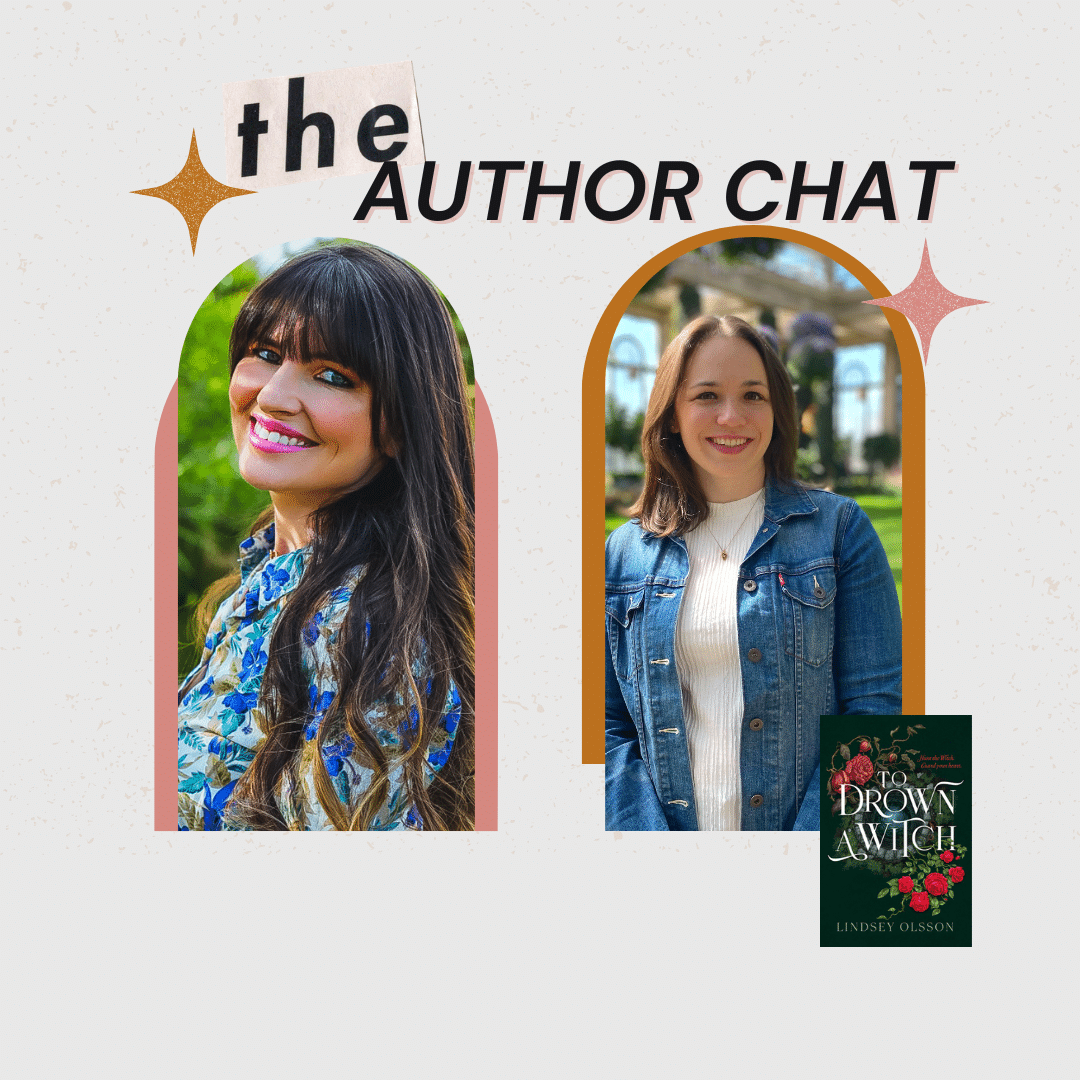
I am so excited to welcome debut YA romantasy author of To Drown a Witch, Lindsey Olsson. Her upcoming release is the first in the duology series and is filled with amazing worldbuilding and characters you’ll become immersed in.
Lindsey, congrats on To Drown a Witch! Tell us more about it (minus spoilers) 😊
I started To Drown a Witch at the beginning of my second semester of grad school. At the time, I was writing a YA contemporary novel and had committed to continue writing that novel through to the end of my second semester. However, a short prompt session and one prologue later, I knew I had to write this new YA fantasy. With the blessing of my advisor, I abandoned the YA contemporary and dove headfirst into To Drown a Witch. That initial draft looked very different from the final: Nes was called Nesla, and she was very whiny and unsympathetic. I knew just from the way Nes’s character came out on the page that I needed to scrap the first draft and start over. However, even in those early stages, To Drown a Witch was still a story about a world that feared the Witch and how their fear overrode all reason, leading them to kill the innocent.
What inspired you to craft a romantasy novel? Was it something you always wanted to do?
I would definitely say I’ve always wanted to write a romantasy novel. For years, it was the genre I gravitated towards when both reading and writing, even when the genre didn’t have a name. There are so many different ways one can write a romance plot line, and then to add the endless possibilities of fantasy on top of it? I can’t think of a better, blanker canvas (so to speak). Plus, it is definitely a personal preference of mine. I love the excitement of a new romance and the constant thread of the unknown in fantasy—put the two together and you have me hooked!
Do you have an all-time favorite chapter?
An all-time favorite? Nope, but only because I can’t choose. I adore the prologue because it is the scene that started the whole story, but I also love the epilogue for the possibilities it sets up in the sequel. Chapters 9 and 10 are close to my heart because they were such fun to write. And then—no spoilers and readers better not jump ahead to sneak a peek at these chapters—I love 33 and 40. Chapter 33 is one of those chapters that didn’t change much from the first time I wrote it, and I think that is because it signals an emotional turning point. Finally, there is a line in chapter 40 (again, no spoilers) that every time I read it, I feel my heart wrench.
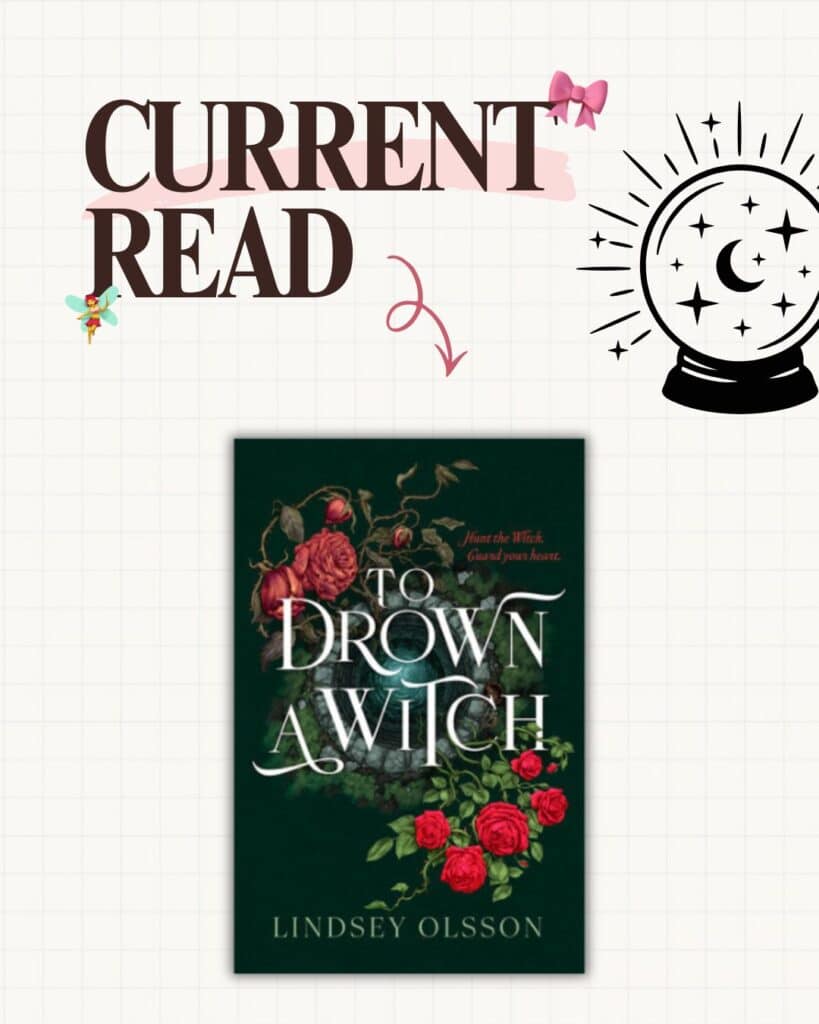
The cover is amazing! Were you involved in the design process?
I am so happy with how the cover turned out! I was lucky enough to be involved with the cover nearly every step of the way. Throughout the process, I was able to discuss options with my editor. Together, we worked to provide feedback on initial concept designs, early sketches, and all the way through to the final result. And then when my publisher decided to add sprayed edges, I was over the moon. I am so very grateful to To Drown a Witch’s designer, Theresa Evangelista, and cover artist, Colin Verdi, for their incredible work.
What is it you hope readers take away from To Drown a Witch?
Oh gosh, I feel like this question shouldn’t be as hard as it is. There are so many things I hope readers get out of To Drown a Witch. First and foremost, I simply hope they get a good story. I love when I get so immersed in a world and its story that I’m sad to leave when it ends. Those are the best kinds of novels. I hope there are some readers who feel that way after reading To Drown a Witch. But I also hope there are some readers who look at the choices Nes and Toran make and reflect on the choices in their own lives. There are always consequences to the choices we make, even if that choice is to stay true to oneself, and I think it is important to reflect on them.
How did you go about crafting your characters? Do you write out character sheets? Create a playlist? How do you ‘get to know’ who your characters are?
Oftentimes, I don’t know my characters when I first start writing them. I have tried many times to use character sheets—because I’m definitely the sort of person who loves lists and organization—but they never work out for me. If I try to use character sheets, I either never fill them out completely or I never reference them while writing. Sometimes playlists help give me a feel for my characters, but most often I find songs end up serving more as reminders of who my characters are rather than giving me a sense of the character in the first place. So, how do I craft my characters? I start with three questions. 1. What does the character want? 2. What has happened in their past to shape who they are today? 3. And what do they do? The first two questions are probably self-explanatory, but I imagine the third sounds a little vague. And it is, but the explanation is simple: I find out the most about my characters by writing them into scenes.
Whether these scenes make it into the book or not doesn’t matter. I feel I can’t truly know a character until I put them in the middle of the action or present them with a mystery and see what they do. Sometimes, I have an idea in my head of what the character will do in a specific scene, but when I sit down to write said scene, the character’s reaction is completely different. I’ve had characters who were supposed to dance with their love interest to the point of a first kiss, who instead end up starting a fight with that love interest in the middle of the dance floor and storming off. And I love when my characters take over the scene like that because, in pretty much every case, they’re right and I’m wrong.
Do you go about crafting the plot similarly, meaning do you have outlines you fill out? Or do you start to write and see where the plot takes you?
I am both a pantser and a plotter. That said, I find I always need an outline at some point in the process. When I start with a brand new idea, the inspiration is overflowing. At that point, if I begin writing an outline, I usually find myself cutting it short just to get the writing started. I don’t berate myself for abandoning the outline because inspiration doesn’t last. I would rather write as much of the story as I can while the inspiration is strong rather than lose it before I even start drafting. Then, once the inspiration leaves me or I get stuck (this is usually around chapters 8-12 of a new novel), I return to my outline and get to work hammering out the rest of the plot. However, I’ve found all of the above doesn’t apply to writing sequels. With sequels, there is less freedom, and thus I need to work with an outline from start to end (especially if there is a deadline hanging over my head).
What has been the most rewarding part of your writing journey thus far?
Now this is a hard question. Can I say all of it? There is a small part of me that wishes I could have gotten published ten years ago, but there is a larger part of me that recognizes the significance of all I’ve accomplished on my way to publishing my first novel. One thing that has been extremely rewarding is holding the ARC copies of my book in my hands. I just keep thinking, “It’s real,” but at the same time, it doesn’t feel real to me. Still, for the young girl who used to format her writing in two columns, print it out, and fold those pages over to make them look more like a real book, having an ARC is a dream come true. I may or may not cry when I get to hold the final hardcover.
What’s your favorite part of the writing process? Is it the drafting stages? Editing stages? Publishing stages?
Since I’m still experiencing the publishing stages of the writing process for the first time, I can’t say whether it is my favorite or not. I find there are pros and cons to all stages. However, if I had to pick one, I’d choose the drafting stage as my favorite. Some people see a blank page and get intimidated or freeze up. I feel the opposite. I’m excited by a blank page. I love the endless possibilities of it, of making something out of nothing. While first drafts are no doubt incredibly hard to complete (and are pretty much never very good), writing a first draft is oftentimes the most fun I have when working on a novel.
Can you share more about your writing journey? What was the process like in finding an agent to rep you?
I feel like I could write entire pages about my writing journey! It’s a long one (like 20+ years in the making), so I’ll do my best to trim it down. I specifically searched for colleges with creative writing programs and ended up at Elon University. And while I enjoyed the classes I took, the program focused solely on writing short stories. I knew even before I went to college that I wanted to write novels. So despite having classes geared toward creative writing, I still found myself writing what I wanted outside of my classwork. Years after college, when I decided to go to grad school, I told myself, “If you’re going to go back to school, you’re going to go for exactly what you want to learn.”
That’s how I ended up in the Writing for Children and Young Adults MFA program at Hamline University. There, I met and learned from some wonderful fellow authors. It was a couple of years after I graduated that I finally felt ready to start querying agents (I spent much of that time revising and rewriting To Drown a Witch). I did all of my own research—googling literary agencies and reading the acknowledgments of pretty much every book I owned in search of the names of potential agents. I wrote a few different query letters then, with the help of an editor friend, chose the best one, and sent it out. I sent out about 15 queries to start, and all 15 were rejections. Then I compiled a new list and sent out another 12. It was while I was waiting to hear back from the second round that an advisor at Hamline suggested I also query my agent. I did, and the rest is history!
Was becoming a traditionally published writer always something you wanted to be?
Yes, absolutely, 100%. I have wanted to publish a work of fiction since I first learned to write back in 1st grade. All throughout my schooling, I looked forward to those rare moments when my teacher assigned a fictional writing exercise. But, even in elementary school, those assignments weren’t enough for me. I started writing outside of school and, from then on, I always had an extra notebook or pen with me so I could write during free time. At one point, I did consider self-publishing my novels, until I learned of all the extra work and self-promotion I would have to do in order to make sure the book was a success. After that, I knew if I wanted to make it as an author, I had to go the traditional route. Even now, it is so weird to me to promote my own work. I’m sure I’m not the only author who feels that way.
Anything else you want to add? Where can readers find you on social media?
The conclusion to the To Drown a Witch duology will be out in 2027! Any updates I have on To Drown a Witch and its sequel will likely be posted to my Instagram @lindseyolssonauthor, Facebook (Lindsey Olsson), or on my website lindseyolsson.com. Readers can reach me on either platform, where I’ll happily answer any questions!
Thanks for joining us, Lindsey! Comment below any other questions you have! xoxo!